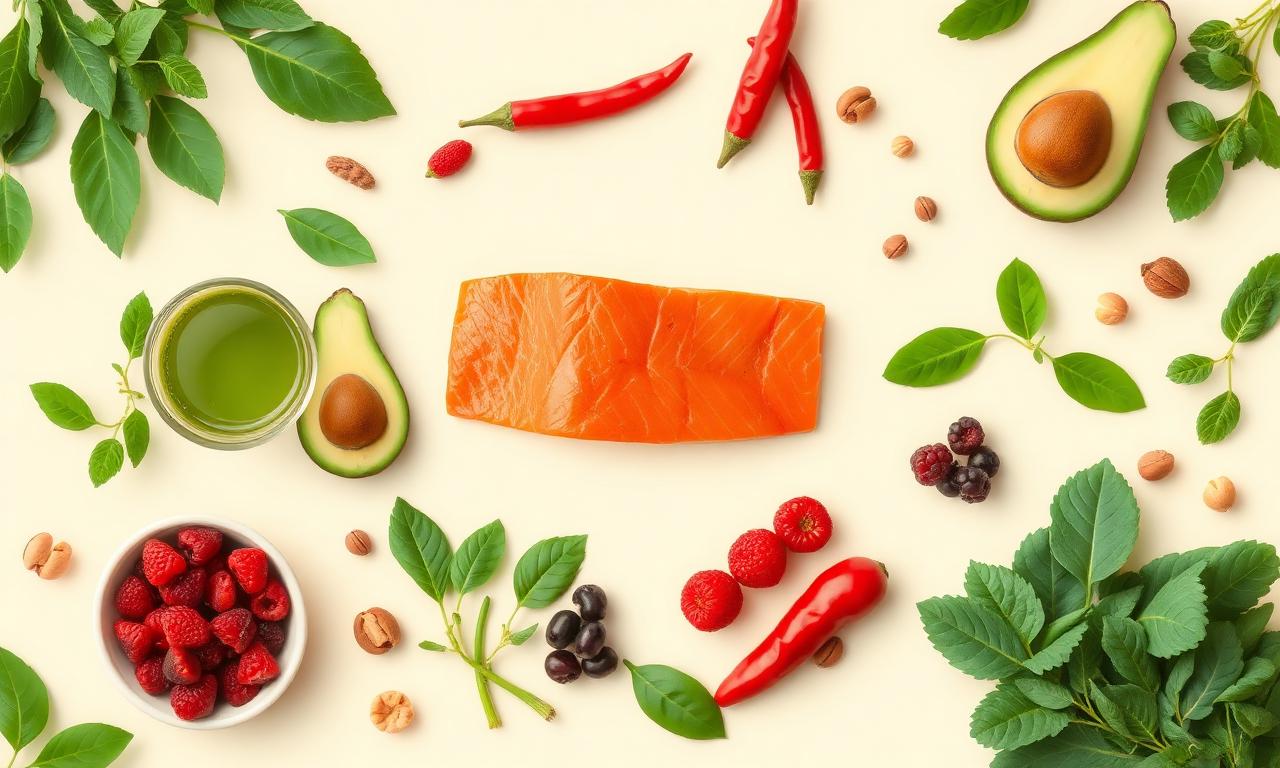
How food actually supports fat loss
Fat loss happens when the body draws on stored energy more than it stores new energy over time. Food doesn't create that gap through some magical mechanism — it creates it by influencing three practical things: how full you feel, how stable your energy stays, and how much protein you get. Foods that win on those fronts are the ones worth building meals around.
If you want the deeper mechanics, our understanding weight loss guide and metabolism basics explainer both pair well with this article.
1. Protein-forward foods
Protein is the single most satiating macronutrient per calorie, and it also has the highest thermic effect of food — meaning your body burns more calories digesting it than it does digesting carbs or fat. That makes protein-rich foods the closest thing to a real "fat-burning" category.
- Eggs — protein plus choline, very filling for the calories.
- Greek yogurt (plain, unsweetened) — nearly twice the protein of regular yogurt.
- Chicken breast, turkey, lean beef — dense protein sources with minimal calorie noise.
- Fatty fish (salmon, sardines, mackerel) — protein plus omega-3s that support metabolic health.
- Lentils, chickpeas, black beans — plant protein plus fiber, an unusually strong satiety combination.
- Cottage cheese — slow-digesting casein protein, useful as an evening meal.
See our protein basics guide for how much to aim for daily.
2. High-fiber vegetables and legumes
Fiber slows digestion, blunts blood-sugar spikes, and physically fills the stomach for very few calories. Most adults get well under the recommended 25–35 g per day.
- Leafy greens (spinach, kale, arugula, romaine)
- Cruciferous vegetables (broccoli, cauliflower, brussels sprouts, cabbage)
- Berries (raspberries and blackberries lead on fiber per calorie)
- Chia and flax seeds
- Oats and barley (beta-glucan fiber supports satiety and cholesterol)
3. Healthy fats that promote satiety
Fat is calorie-dense, so portion still matters — but a modest amount of the right fat with a meal noticeably reduces hunger later.
- Avocado — monounsaturated fat plus fiber.
- Extra-virgin olive oil — the most consistently well-studied dietary fat.
- Nuts (almonds, walnuts, pistachios) — filling in small portions; keep to a handful.
- Seeds (pumpkin, chia, flax) — micronutrient-dense additions to yogurt, oats or salads.
4. Drinks that quietly help
What you drink can quietly add or subtract hundreds of calories from your day without registering as food. The wins here are simple.
- Water — the single highest-leverage beverage choice, especially before meals.
- Green tea — mild caffeine plus catechins; a reasonable daily habit.
- Black coffee — appetite-blunting and thermogenic in modest doses.
- Herbal teas — a warm, calorie-free option in the evening.
More on this in our hydration and metabolism guide.
The "fat-burning" foods that are mostly myth
Grapefruit, apple cider vinegar shots, celery juice cleanses, cayenne detoxes — the honest answer is that any weight change from these is almost always calorie restriction in disguise, not a special metabolic effect. They aren't harmful in moderation, but they aren't the shortcut social media suggests.
For a broader look at the traps beginners fall into, our common weight loss mistakes guide is a good pairing.
Building the plate
Rather than obsessing over any single "fat-burning" food, use a simple plate template most of the time: roughly half vegetables, a palm-sized portion of protein, a fist-sized portion of fibrous carbs, and a thumb of healthy fat. That structure quietly delivers fullness, protein and micronutrients without needing to track anything.
Once you're comfortable, our meal planning basics guide shows how to turn this into a weekly routine.
Frequently Asked Questions
Do any foods actually burn fat?
No single food 'burns' fat on its own. What certain foods do is support satiety, blood-sugar stability, protein intake and metabolic health — all of which make a sustained calorie balance easier to maintain.
Is green tea genuinely helpful?
Green tea contains catechins and modest caffeine that appear to slightly increase energy expenditure in some studies. The effect is small on its own but reasonable as part of an overall pattern.
Are eggs good for weight management?
Eggs are protein-dense, filling, and support stable morning appetite for many people. For most adults without cholesterol concerns, they're a strong breakfast choice.
What about spicy foods?
Capsaicin (in chili peppers) may produce a very small thermogenic bump and can help some people eat more slowly, which supports satiety.
Should I avoid all carbs to lose fat?
No. Fibrous, minimally processed carbs (vegetables, legumes, whole grains, fruit) support fullness and micronutrients. The problem is usually refined, calorie-dense carbs eaten passively.
This article is for general educational purposes only and is not medical, nutritional or fitness advice. Consult a qualified clinician before making changes to your health routine.