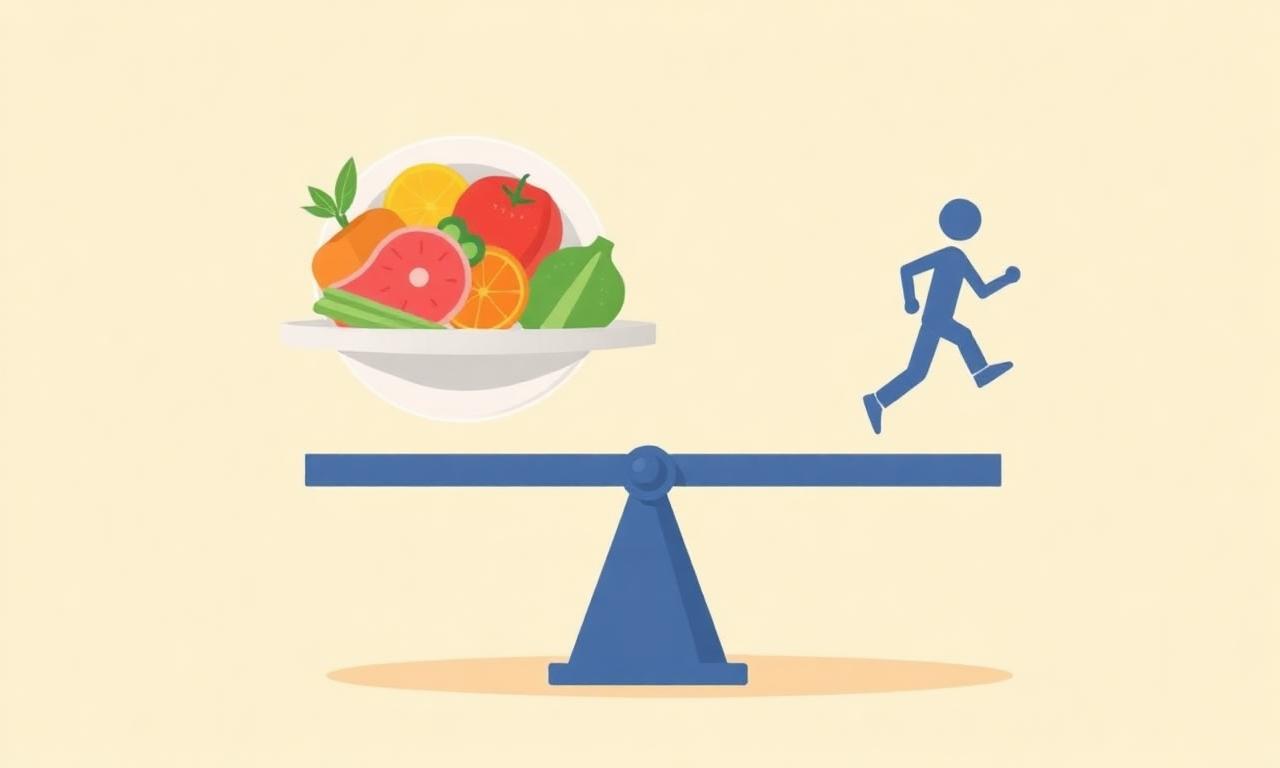
What a calorie deficit really is
A calorie deficit is when the amount of energy you take in from food is less than the amount of energy your body uses in a day. When that gap is present consistently, your body dips into stored energy — mostly fat — to cover the difference. That's fat loss, in one sentence.
Everything else — low-carb, keto, intermittent fasting, "clean eating," meal replacements — works to the extent that it helps you create and hold that gap. It doesn't work through any pathway that bypasses it.
Estimating yours (without obsession)
You don't need to know your maintenance calories to the last digit. A workable estimate:
- Multiply your body weight in pounds by 13–15 for a rough maintenance calorie estimate. (Lower end for sedentary, higher end for very active.)
- Subtract 300–500 calories from that to create a moderate daily deficit.
- That's your target intake. Adjust after 2–3 weeks based on real results.
Prefer a guided estimate? Our weight loss goal calculator walks you through it in about a minute.
How large should the deficit be?
Bigger isn't better. A 300–500 calorie daily deficit is the sweet spot for most adults — steady progress, sustainable energy, and enough food to protect muscle, hormones and sanity.
Aggressive deficits (750+ daily) accelerate short-term scale movement but almost always cause hunger crashes, mood drops, poor sleep, muscle loss and eventual rebound eating. That's the pattern behind most "I lost 30 pounds and gained back 40" stories.
Practical ways to create one
You can create a deficit without any tracking app. High-leverage moves:
- Anchor each meal with a protein source and a vegetable.
- Cut liquid calories (soda, juice, sweetened coffee drinks, alcohol). This alone often creates a large deficit invisibly.
- Stop the passive kitchen grazing — it's usually where the "hidden" calories live.
- Add walking. See our walking for weight loss guide.
- Sleep. Under-slept adults consistently eat more. See our sleep guide.
Plateaus and adaptation
As you lose weight, your body needs slightly less energy. That's why the intake that produced weight loss at 200 lb may only produce maintenance at 185 lb. Plateaus don't mean you failed — they mean your baseline changed. A modest recalibration of intake or activity almost always restarts progress.
Signs your deficit is too aggressive
- Constant obsessive thoughts about food.
- Sleep disruption, especially early-morning waking.
- Sharp drop in workout performance.
- Mood volatility, irritability, low libido.
- Cycles of strict compliance followed by binge episodes.
If two or more of these show up, the fix is almost always to eat slightly more, not to "try harder."
Frequently Asked Questions
What is a calorie deficit?
A calorie deficit is when the energy you take in from food is less than the energy your body uses in a day, causing your body to draw on stored energy — including body fat — to make up the difference.
How big should my deficit be?
For most adults, a modest 300–500 calorie daily deficit supports steady, sustainable fat loss without wrecking energy, mood or muscle.
Do I have to count every calorie?
No. Awareness matters more than perfection. Many people succeed by controlling portions, prioritizing protein and fiber, and skipping mindless snacking.
Why did I stop losing weight?
Plateaus are normal. Your body adapts as you get lighter; a small recalibration of intake or activity usually restarts progress.
Can a deficit be too aggressive?
Yes. Very steep deficits often cause hunger crashes, muscle loss, poor sleep and rebound eating. Sustainability beats speed.
This article is for general educational purposes only and is not medical, nutritional or fitness advice. Consult a qualified clinician before making changes to your health routine.